Chincheros, Salt mines and Moray
Itinerary
Pick you up from your Hotel around 7:00 am.You will take a van for 1 hr toward:
Chinchero
Is a traditional Andean town known for its well-preserved Inca ruins, colonial church, and vibrant weaving culture. Built on the estate of the Inca Túpac Yupanqui, Chinchero offers insight into Inca architecture while maintaining strong indigenous customs that are still practiced today. Located about 30 km (19 miles) northwest of Cusco, sitting at around 3,760 m (12,340 ft)
Cultural significance: Known for its strong preservation of Inca traditions, especially textile weaving.
Archaeology: Features Inca terraces, walls, and the remains of Tupac Yupanqui’s royal estate.
Colonial influence: The 17th-century church of Nuestra Señora de Monserrat was built on Inca foundations and contains colonial artwork.
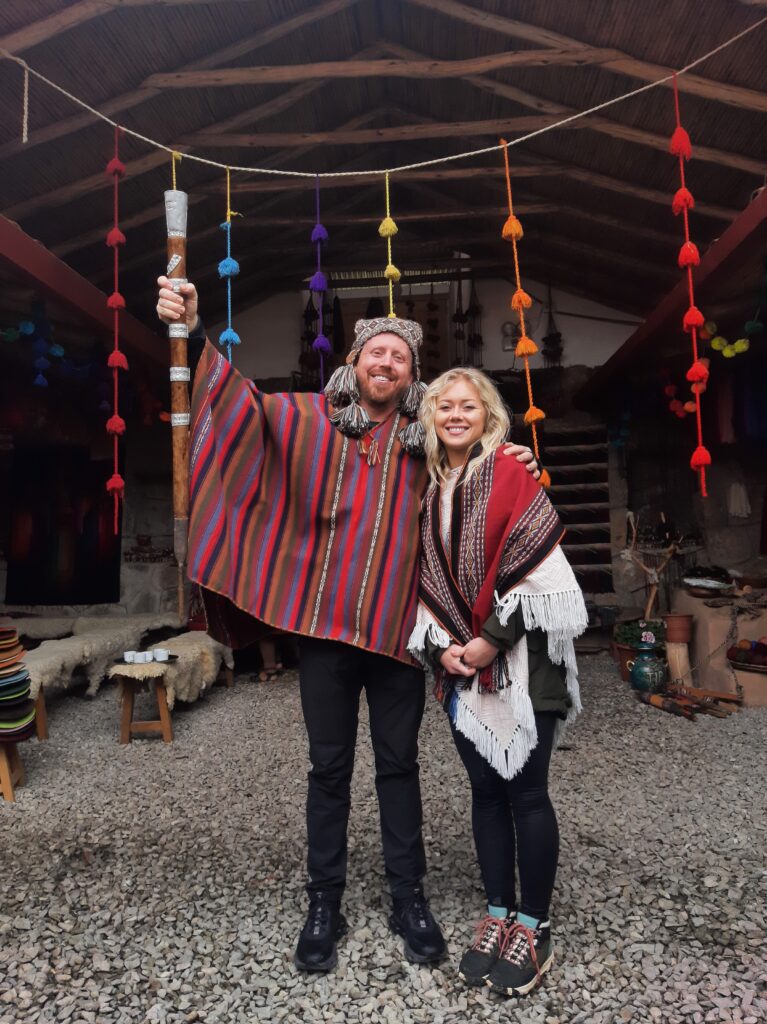
Modern life: Famous for weaving cooperatives where visitors can see demonstrations of natural dyeing and traditional techniques.
Scenery: Panoramic views of the Sacred Valley and the Vilcabamba mountain range
Maras Salt Mines
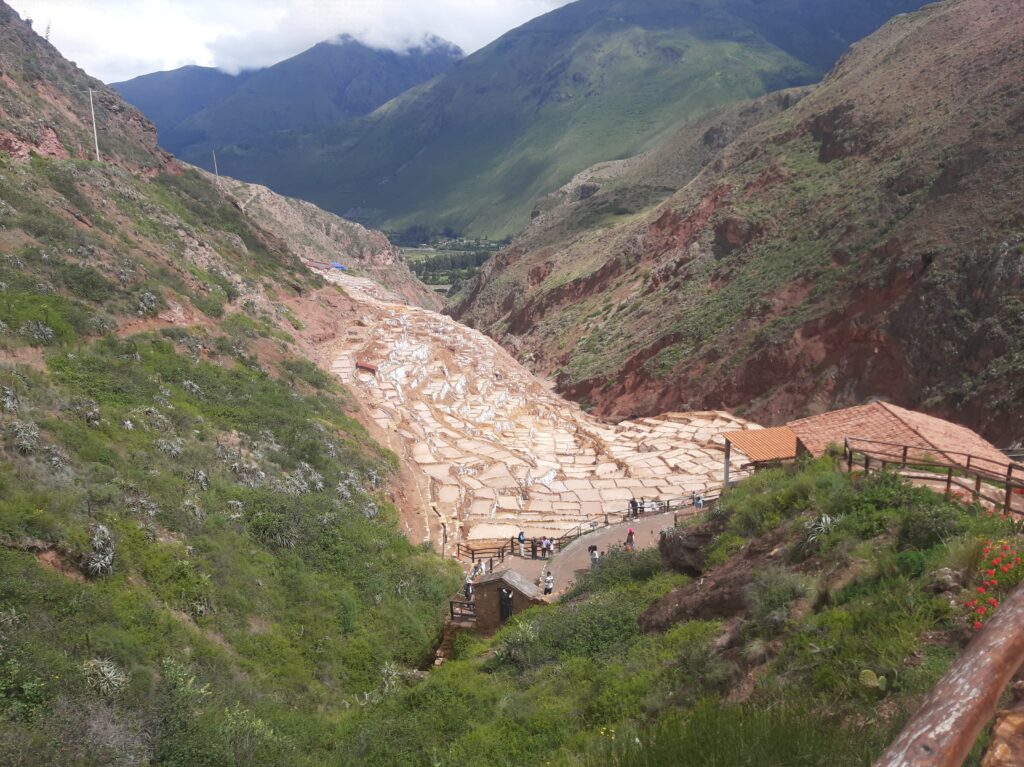
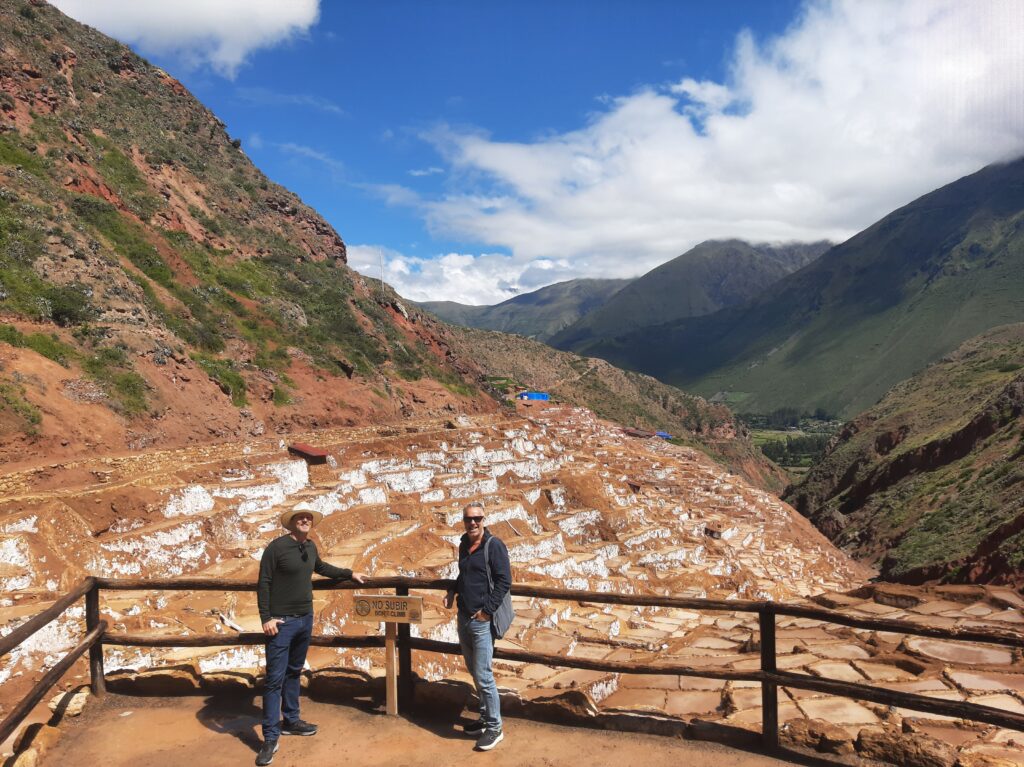
Also called Salineras de Maras, consist of thousands of salt pools made into a mountainside. These pools have been used since pre-Inca times and are still harvested by local families using traditional methods.
Are located on a hillside near the village of Maras, about 7 km (4 miles) from Moray.
Description: Over 3,000 small salt pools terraced down the mountainside.
Origins: Salt extraction dates back to pre-Inca times and continues today using the same traditional methods.
How it works: A natural underground saltwater spring feeds the pools; as water evaporates, salt crystals form.
Ownership: Each pool is owned and maintained by local families.
Visual impact: One of the most striking landscapes in the Sacred Valley, especially in sunlight.
Moray
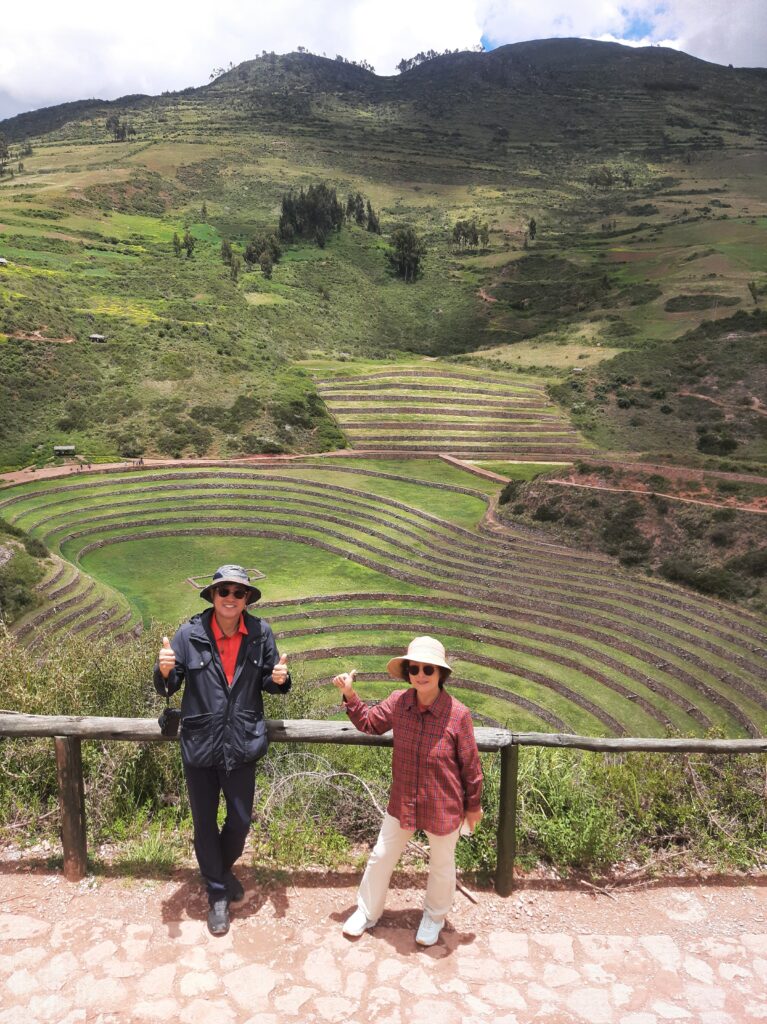
Is an Inca archaeological site famous for its circular terraces. It is believed to have served as an agricultural laboratory where the Incas experimented with crops under different microclimates, demonstrating their advanced understanding of farming and environmental science.
circular terraces.
Purpose: Believed to be an Inca agricultural experimentation center.
Design: Concentric terraces form a bowl-like structure, with temperature differences between top and bottom.
Innovation: Allowed the Incas to test crop varieties at different microclimates.
Engineering: Advanced drainage system prevents flooding, showcasing Inca mastery of agriculture and hydraulics.
Setting: Located on a natural depression surrounded by mountains, adding a beautiful and incredible view